Worth a closer look
Heat
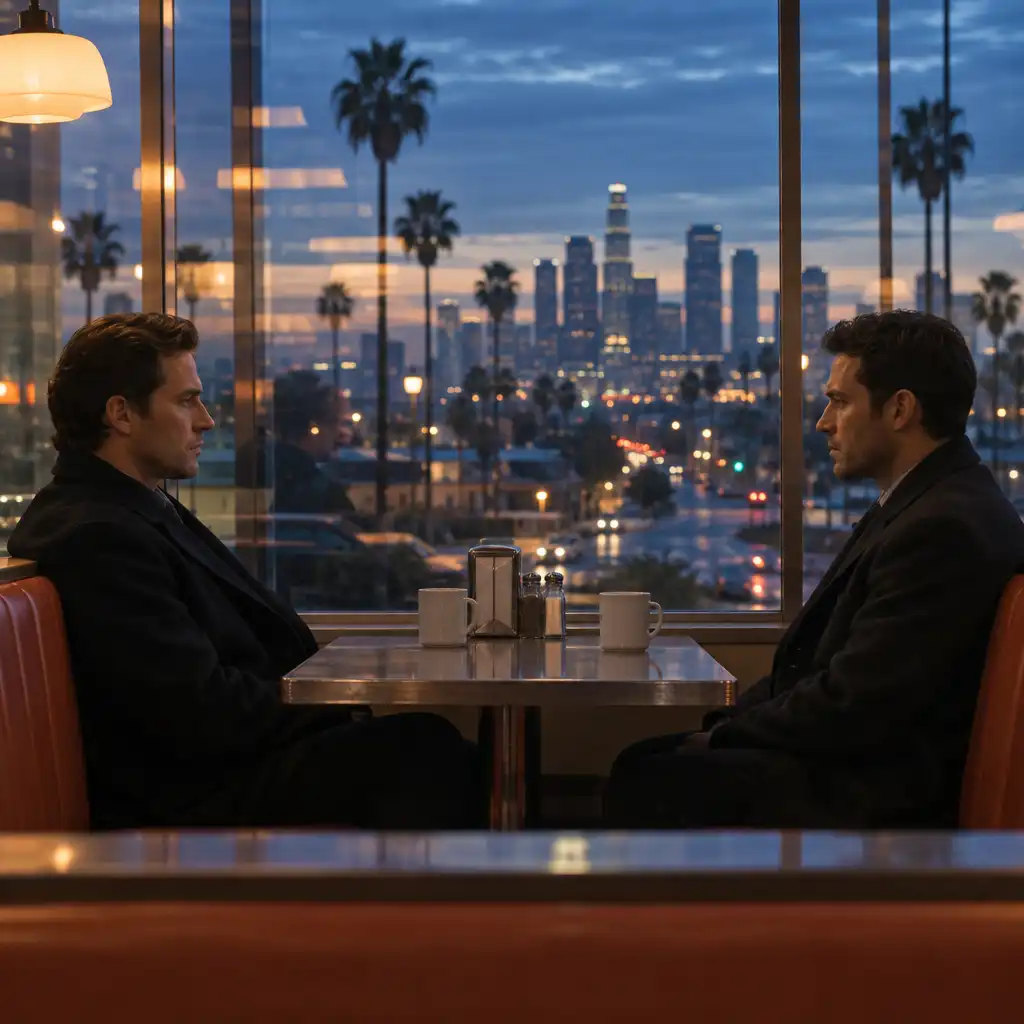
Michael Mann’s 1995 Heat treats the heist not as a shortcut to spectacle, but as an emotional architecture built from discipline, distance and the cost of defining oneself entirely through work. Our review follows the mirrored codes of its central adversaries, asking what happens when professional clarity becomes a barrier to ordinary life.
It also stays with Los Angeles as an operational map: roads, glass, empty margins and night sound make tension feel spatial long before release arrives. The result is a reading of procedure as character, where stillness is never empty and violence is never the whole point.
Read reviewPaired protagonists. How restraint, gesture and obligation turn a rivalry into a study of recognition.
City as map. How geography and sound design organise anticipation without reducing the city to backdrop.
Stillness and release. How pauses, routines and ruptures establish scene-level pressure.